2026-09-14 ·
Local Rules for Construction Waste When Adding a Deck in Yorktown
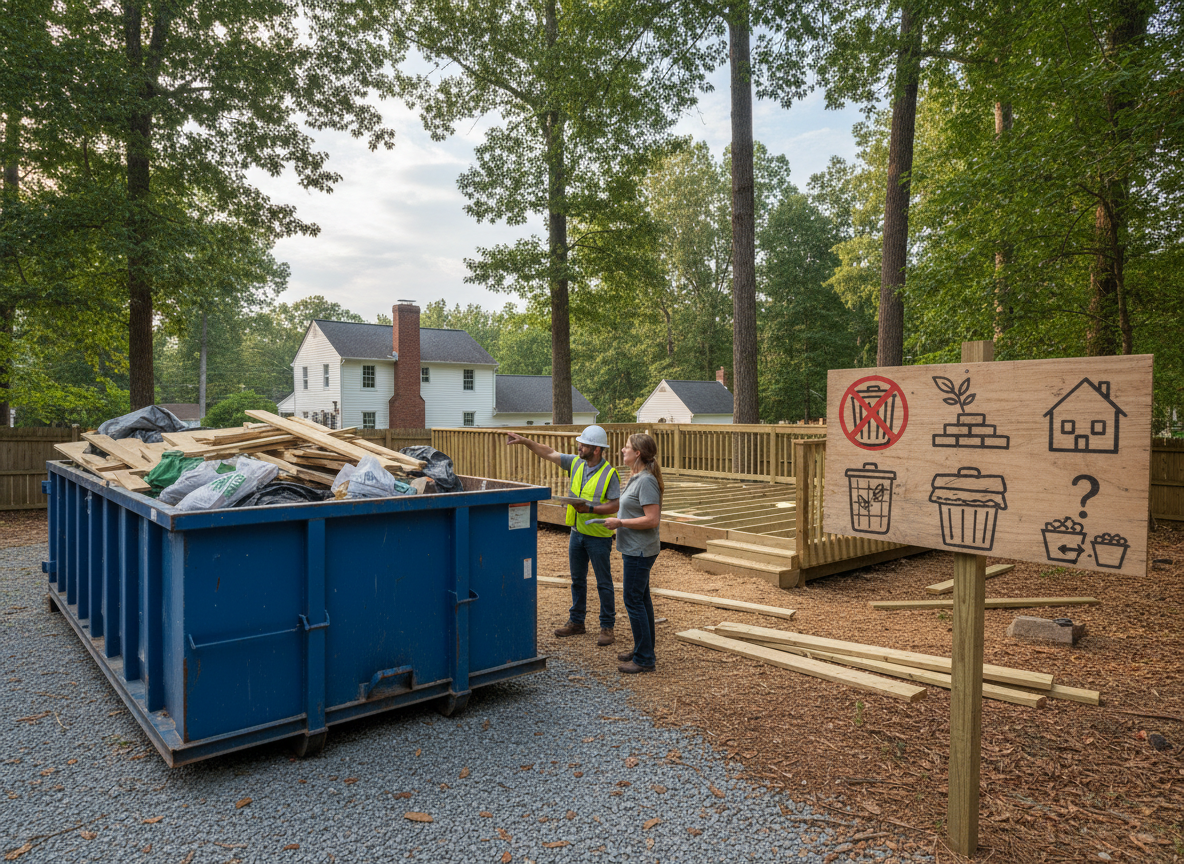
York County requires all deck construction debris in Yorktown to be kept separate from household trash and disposed of through permitted rolloff containers rather than regular curbside pickup. This rule applies because mixed loads often contain treated lumber and concrete that local landfills reject in standard streams. Homeowners typically need to secure a permit from the county building department before starting work, then arrange for on-site containment sized to the project scope.
Permit and Separation Rules in York County
York County building permits for decks mandate that all waste streams stay segregated on site until hauled away. Lumber cutoffs, railing scraps, and post material must go into one container while concrete footings and dirt fill go into another to meet landfill acceptance standards. Failure to separate can result in rejected loads at the transfer station near York. Local crews report that red clay soils common around Yorktown often stick to concrete debris, requiring extra rinsing before transport to prevent contamination fees.
Homeowners in neighborhoods surrounding Yorktown frequently encounter older ranch-style homes where deck additions involve removing existing pressure-treated posts sunk into clay-heavy ground. This creates mixed waste that cannot enter yard waste streams. County inspectors check separation during final walkthroughs, so planning container placement near the work zone helps crews load efficiently without cross-contamination.
Handling Lumber and Treated Wood Waste
Treated lumber from deck framing cannot be burned or buried on Yorktown properties due to York County air quality rules and groundwater protections. Instead, it must travel in dedicated rolloff containers to approved C&D facilities. Projects adding a 12-by-16-foot deck commonly generate 1.5 to 2 tons of wood waste, which fits in a 10-yard container when stacked flat. Rain events typical in the Piedmont region can swell wet lumber, so covering the container prevents overflow and keeps loads within weight limits during transport.
Crew experience in the Yorktown area shows that cedar or composite decking scraps often arrive mixed with nails and screws. These metal pieces must be pulled or screened out before the load reaches the landfill to avoid equipment damage fees. Keeping a magnetic sweeper on site during demolition reduces this issue and keeps the rolloff contents compliant.
Managing Concrete and Dirt from Footings
Concrete piers and excavated red clay from Yorktown deck footings require a separate container because local landfills charge different tipping fees for heavy materials. A standard 20-yard rolloff handles the output from four to six footings when the dirt remains relatively dry. Wet weather common from spring through fall increases weight quickly, so scheduling pickup before storms helps control costs.
Homeowners near York often place the concrete container on plywood sheets to protect driveways from cracking under the load. County rules also prohibit washing concrete residue into storm drains, so crews use tarps and shovels to contain slurry on site until it dries and can be added to the container.
Practical Steps for Yorktown Deck Projects
Begin by confirming the county permit lists acceptable disposal methods, then order a construction dumpster sized to the expected volume. Place it on a level section of driveway or yard where the truck can access it without damaging septic fields or irrigation lines common in older Yorktown lots. Schedule delivery after demolition starts so the container does not sit empty through multiple rain events.